When Missouri homeowners think about roof maintenance, they typically focus on exterior elements like shingles and gutters. However, the most critical damage often begins inside your home. An internal roof inspection examines your roof system from within—checking attics, insulation, rafters, and structural elements that exterior inspections miss completely.
For homeowners across Union, Washington, Festus, St. Clair, Herculaneum, Gerald, Fenton, Valley Park, DeSoto, Pevely, and Eureka, Emmendorfer Exteriors provides comprehensive internal roof inspection services using advanced moisture detection, thermal imaging, and structural assessment tools. Discover why this proactive approach protects your investment, prevents costly repairs, and maintains your home’s value.
What Is an Interior Roof Inspection?
An interior roof inspection evaluates your roof system from inside the home, primarily through the attic, ceilings, insulation, and structural framing.
Instead of relying only on visible roof surfaces, inspectors assess:
- Attic moisture levels
- Roof decking condition
- Insulation performance
- Ventilation airflow
- Structural integrity
Many modern roof leaks are condensation-related, not storm-related — something only an interior inspection can detect early.
Why Homeowners in Missouri Should Prioritize Interior Roof Inspections
Missouri’s climate creates perfect conditions for hidden roof damage:
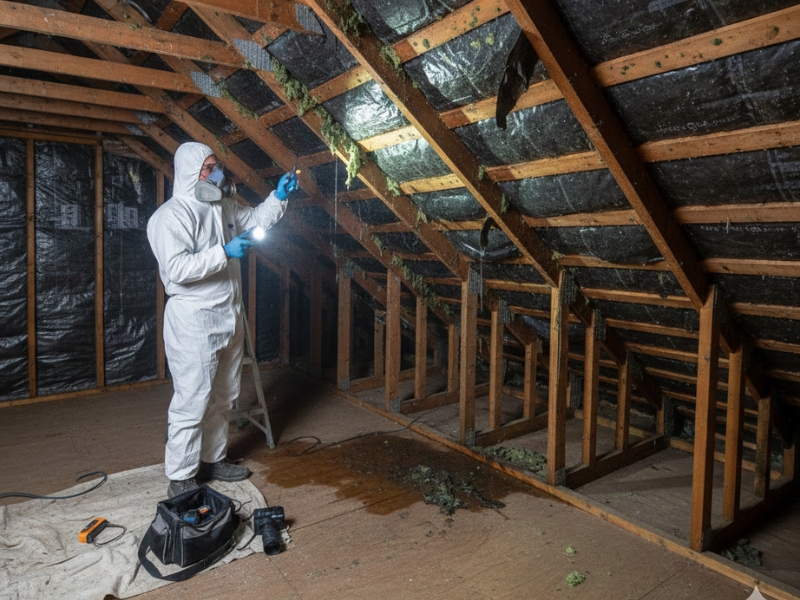
- Hot summers cause trapped attic moisture
- Heavy rainfall leads to slow roof seepage
- Cold winters trigger condensation cycles
In areas like Union, Festus, and Fenton, inspectors frequently find mold growth, rotting rafters, and compressed insulation long before an exterior leak appears.
A routine home roof inspection interior helps detect:
- Moisture before rot forms
- Structural stress before sagging occurs
- Insulation failure before energy bills rise
Interior vs. Exterior Roof Inspections: Key Differences
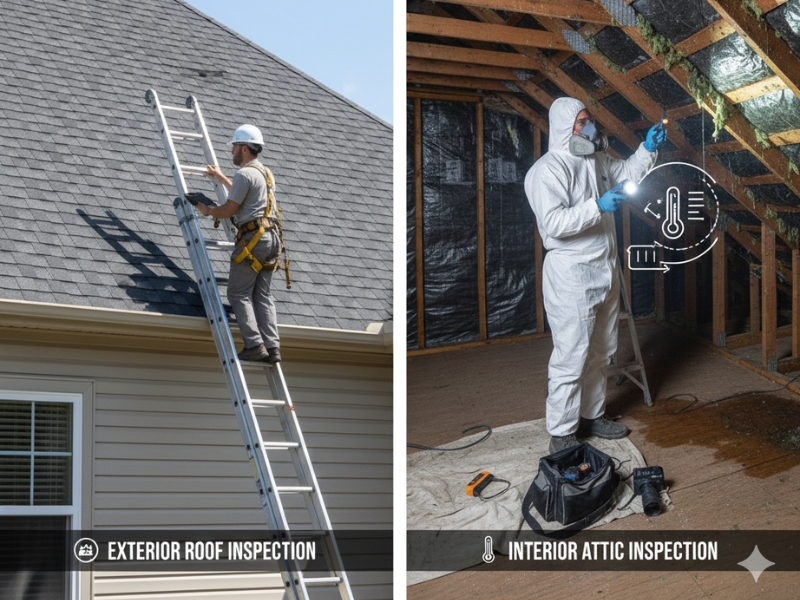
Exterior Inspection | Interior Inspection |
Shingles & flashing | Attic decking & rafters |
Gutters & drainage | Insulation & vapor barriers |
Storm damage | Moisture & mold |
Visible wear | Hidden structural stress |
Best Practice: Always combine both inspections for full roof health.
Signs You Need an Interior Roof Inspection
Don’t wait for active leaks. Schedule an inspection if you notice:
- Yellow or brown ceiling stains
- Peeling paint or bubbling drywall
- Musty attic odors
- Uneven room temperatures
- Damp or flattened insulation
- Mold on rafters or decking
- Daylight visible through attic boards
The Hidden Dangers of Skipping Interior Roof Inspections
Skipping inspections can result in:
- Structural rot and weakened trusses
- Mold spreading through HVAC systems
- Insulation failure and energy loss
- Higher utility bills
- Voided roofing warranties
Example: In Pevely and DeSoto homes, inspectors often find moisture damage that has been active for years without visible leaks.
Key Areas Checked During a Home Roof Inspection Interior
Attic
- Moisture levels
- Mold growth
- Vent airflow
- Pest activity
Rafters & Trusses
- Sagging or cracking
- Wood rot
- Structural stress points
Ceilings & Walls
- Stains and bubbling
- Hairline cracks
- Soft drywall spots
Insulation & Vapor Barriers
- Wet or compressed insulation
- Gaps or missing coverage
Chimneys, Vents & Penetrations
- Seal failures
- Condensation buildup
Benefits of Regular Interior Roof Inspections
Regular interior roof inspections play a crucial role in protecting your home from hidden and costly damage. One of the most important benefits is early leak detection, allowing professionals to identify moisture intrusion before it spreads into insulation, drywall, or structural framing. These inspections also support mold prevention by spotting damp areas and ventilation issues early, helping maintain healthy indoor air quality. By examining rafters, trusses, and roof decking from inside the attic, inspectors provide structural protection, ensuring small weaknesses are addressed before they compromise roof stability. Additionally, interior inspections improve energy efficiency by identifying insulation gaps and air leaks that cause heat loss in winter and excess heat buildup in summer. Over time, this leads to lower long-term repair costs, as minor issues are resolved before major repairs are needed. Finally, many roofing manufacturers require documented inspections to maintain coverage, making regular interior roof inspections essential for warranty compliance and long-term roof protection.
Tools Used During Interior Roof Inspections Standard
Professionals now use:
- Moisture meters
- Thermal imaging cameras
- Endoscope cameras
- Humidity sensors
- Digital photo-based reports
The Role of Ventilation in Interior Roof Health
Proper ventilation prevents warm, moist air from becoming trapped in the attic. Inspectors check:
- Soffit vents
- Ridge vents
- Exhaust airflow
Poor ventilation is a top cause of roof failure in high-humidity Missouri homes.
How Interior Roof Inspections Improve Energy Efficiency
Interior roof inspection plays a direct role in improving a home’s energy efficiency by identifying hidden insulation gaps, air leaks, and moisture-damaged materials that allow heated or cooled air to escape. During an inspection, professionals assess attic insulation coverage, ventilation balance, and sealing around penetrations, ensuring your home maintains consistent temperature control. After completing interior roof inspections, many homeowners in Eureka and Valley Park experience more stable indoor temperatures, a reduced workload on HVAC systems, and lower monthly energy bills. By addressing these inefficiencies early, interior inspections help create a tighter building envelope, improve comfort year-round, and reduce unnecessary energy waste.
How Often Should You Schedule an Interior Roof Inspection?
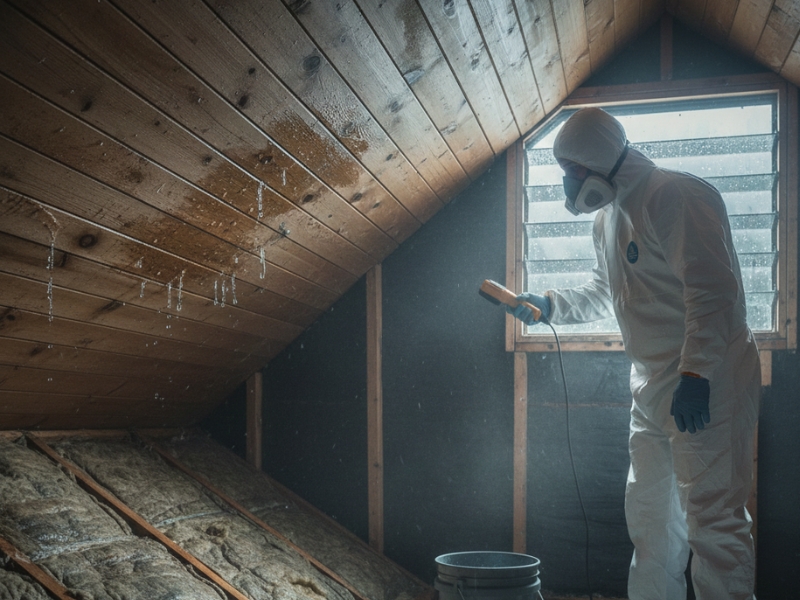
- Once per year (minimum)
- Twice per year for older roofs
- After major storms or hail events
Roof Inspection After Storm Damage
Why Choose Emmendorfer Exteriors?
Emmendorfer Exteriors stands out by combining deep local climate expertise with advanced interior roof inspection technology to deliver accurate, reliable results. Our team understands how Missouri’s seasonal heat, humidity, storms, and temperature swings impact roofing systems from the inside out. We provide honest, detailed inspection reports with clear explanations, photos, and actionable recommendations—never pressure or guesswork. Most importantly, we focus on long-term home protection strategies, helping homeowners address small issues early to prevent costly future dam
Conclusion
Your roof’s real condition isn’t always visible from the outside. Interior roof inspections uncover hidden moisture, insulation failures, and structural stress before they become expensive emergencies. By scheduling regular inspections with Emmendorfer Exteriors, Missouri homeowners gain protection, efficiency, and peace of mind all from the inside out.
Protect your home early Inspect smarter Act before damage spreads.
FAQ Section :
1. What is an interior roof inspection?
It examines the roof system from inside the attic to identify moisture, insulation, and structural issues not visible outside.
2. How often should interior roof inspections be done?
At least once per year, and after severe storms or hail.
3. Can interior inspections find leaks without visible damage?
Yes. Moisture meters and thermal imaging detect hidden leaks early.
4. Is mold a sign of roof damage?
Yes. Mold often indicates long-term moisture intrusion from roofing issues.
5. Do interior roof inspections help with energy efficiency?
Absolutely. They identify insulation gaps and air leaks that increase utility costs.
6. Are interior roof inspections required for warranties?
Many roofing warranties require documented inspections to remain valid