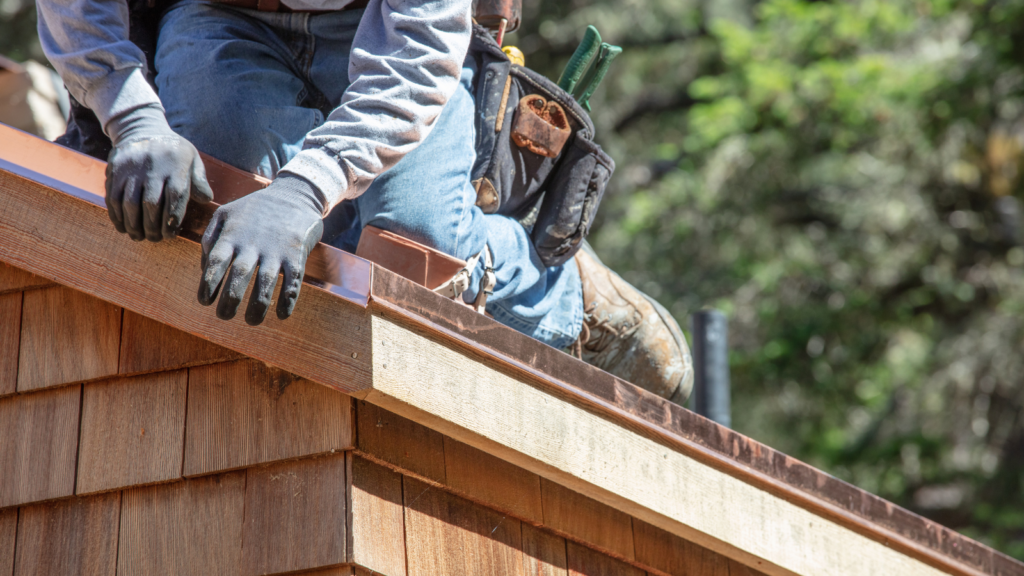
Your roof does more than keep rain out. It protects your home’s structure, insulation, and interior from moisture, wind, and seasonal wear. One of the most important yet commonly overlooked components of a roofing system is perimeter flashing. Proper perimeter flashing installation plays a critical role in keeping water from entering the roof edges where damage often begins.
At Emmendorfer Exteriors, we work with homeowners throughout Union, Washington, Festus, St. Clair, Herculaneum, Gerald, Fenton, Valley Park, DeSoto, Pevely, and Eureka. Many roofing issues we repair start at the roof perimeter due to aging or improperly installed flashing. Understanding how perimeter flashing installation works can help homeowners protect their investment and avoid costly repairs.
What Is Roof Perimeter Flashing?
Perimeter flashing is the metal or composite material installed along the edges of a roof where roofing materials meet fascia, walls, or trim. Its purpose is to direct water away from vulnerable seams and prevent moisture intrusion.
A proper perimeter flashing installation ensures that rainwater flows into gutters instead of behind them. It also blocks wind-driven rain from lifting shingles or entering the roof deck at exposed edges.
Without correctly installed perimeter flashing, even a high-quality roof system can fail prematurely.
Why Perimeter Flashing Installation Matters for Missouri Homes
Homes in Missouri face a wide range of weather conditions, from heavy rain and snow to strong winds and temperature swings. These conditions place constant stress on roof edges, making perimeter flashing installation especially important.
In areas like Union, Washington, and Festus, water damage frequently begins at roof perimeters where flashing has loosened, rusted, or was never installed correctly. Once moisture reaches the roof deck or fascia, rot and mold can follow quickly.
Perimeter flashing installation acts as a protective barrier that keeps water out of places it should never reach.
Common Roof Edge Problems Caused by Poor Flashing
Many homeowners assume roof leaks start in the middle of the roof, but edge failures are just as common. Improper perimeter flashing installation can lead to several issues.
Water can seep behind gutters, soaking fascia boards and causing wood rot. Wind can lift shingles at the edges, exposing underlayment and roof decking. Over time, repeated moisture exposure can weaken the roof structure and increase the risk of interior leaks.
In older homes across St. Clair, Herculaneum, and Gerald, outdated flashing methods often fail to meet current standards, making replacement or upgrades necessary.
How Perimeter Flashing Installation Works
A professional perimeter flashing installation follows a precise process designed to protect the roof edge from every angle.
First, the existing roof edge is inspected. Any damaged decking, fascia, or trim must be repaired before flashing is installed. Installing new flashing over damaged materials only hides the problem temporarily.
Next, the flashing material is cut and shaped to fit the roof edge precisely. Proper overlap is critical to ensure water flows outward rather than underneath the roofing system.
The flashing is then secured and sealed according to manufacturer and local building code requirements. Shingles or roofing materials are layered correctly over the flashing to create a continuous water-shedding system.
When done properly, perimeter flashing installation becomes an integrated part of the roof rather than an afterthought.
Types of Perimeter Flashing Used in Residential Roofing
Different homes require different flashing solutions. The most common types used in perimeter flashing installation include drip edge flashing, fascia flashing, and edge metal.
Drip edge flashing is installed along eaves and rakes to guide water into gutters and prevent capillary action from pulling water under shingles.
Fascia flashing protects the vertical boards behind gutters and prevents water from soaking into wood components.
Edge metal systems are often used on low-slope or specialty roofs to reinforce roof edges and resist wind uplift.
Choosing the right type of flashing is essential for long-term roof performance.
Building Codes and Perimeter Flashing Installation
Modern building codes require perimeter flashing installation on most residential roofs. However, many older homes in DeSoto, Pevely, and Valley Park were built before these standards were enforced.
When replacing or repairing a roof, updating perimeter flashing to meet current code is a smart investment. Proper installation improves water resistance, wind protection, and overall roof durability.
Homeowners should not overlook flashing during roof replacements, as failing to update it can void warranties or lead to early roof failure.
Perimeter Flashing Installation and Roof Longevity
A roof’s lifespan depends heavily on how well its weakest points are protected. Roof edges are exposed to more wind, water, and debris than most other areas.
Perimeter flashing installation strengthens these vulnerable areas and helps extend the life of the entire roofing system. By preventing moisture intrusion at the edges, flashing protects roof decking, insulation, and interior finishes.
For homeowners planning to stay in their homes long-term, proper flashing installation is essential for maximizing roof value.
Signs Your Home May Need New Perimeter Flashing
Many homeowners are unaware their flashing is failing until damage becomes visible. Common warning signs include peeling paint on fascia boards, rusted or missing metal at roof edges, water stains near exterior walls, and shingles lifting at the edges.
If you notice sagging gutters or wood rot along the roofline, perimeter flashing installation may be overdue. These issues are especially common in older neighborhoods throughout Union and Washington.
Early intervention can prevent more extensive structural repairs.
Perimeter Flashing Installation During Roof Replacement
Roof replacement is the ideal time to install new perimeter flashing. Removing old shingles exposes the roof edge, allowing flashing to be installed correctly and integrated into the new roofing system.
Attempting to reuse old flashing often leads to gaps, corrosion issues, or improper sealing. New perimeter flashing installation ensures compatibility with modern roofing materials and improves overall performance.
Homeowners investing in a new roof should always confirm that flashing replacement is included in the scope of work.
Flashing Installation for Existing Roof Repairs
Perimeter flashing installation is not limited to full roof replacements. In many cases, flashing can be repaired or replaced independently to address specific issues.
This approach is common for homes in Fenton, Eureka, and Valley Park where localized damage has occurred but the rest of the roof remains in good condition.
A professional inspection helps determine whether partial flashing replacement is sufficient or if a more comprehensive solution is needed.
How Perimeter Flashing Protects Gutters and Fascia
Gutters rely on proper flashing to function correctly. Without perimeter flashing installation, water can flow behind gutters instead of into them.
Over time, this leads to rotted fascia boards, loose gutters, and water damage along exterior walls. Proper flashing directs water cleanly into the gutter system and prevents moisture buildup behind it.
This protection is especially important during heavy rain events common in Missouri.
Energy Efficiency and Moisture Control
Moisture intrusion affects more than just roof materials. When water reaches insulation or wall cavities, it reduces energy efficiency and increases heating and cooling costs.
Perimeter flashing installation helps maintain a dry building envelope, supporting better insulation performance and indoor comfort.
By keeping moisture out, flashing also reduces the risk of mold growth inside walls and attic spaces.
Why Professional Installation Matters
While flashing may appear simple, improper installation is a leading cause of roof leaks. Incorrect overlaps, poor sealing, or incompatible materials can all compromise performance.
Professional perimeter flashing installation ensures correct placement, secure fastening, and proper integration with roofing and gutter systems.
At Emmendorfer Exteriors, we follow proven installation methods designed for Missouri weather conditions and residential construction styles.
Final Thoughts for Union Area Homeowners
Roof perimeter flashing may not be the most visible part of your home, but it plays a major role in protecting everything beneath it. Perimeter flashing installation safeguards roof edges, prevents moisture damage, and supports long-term roof performance.
Homeowners in Union, Washington, Festus, St. Clair, Herculaneum, Gerald, Fenton, Valley Park, DeSoto, Pevely, and Eureka benefit from properly installed flashing that stands up to local weather challenges.
If you are planning a roof repair, replacement, or inspection, paying attention to perimeter flashing installation can save you time, money, and stress in the long run. Emmendorfer Exteriors is committed to helping homeowners protect their roofs with quality workmanship and dependable solutions.