When it comes to protecting your home in Union, Washington, Festus, St. Clair, Herculaneum, Gerald, Fenton, Valley Park, DeSoto, Pevely, or Eureka, the roof you choose makes all the difference. A roof isn’t just about appearance—it must withstand Missouri’s weather conditions, from heavy rains and storms to hot, humid summers and cold winters. That’s why roof system compatibility is such an important consideration for homeowners.
Every home has unique needs. The size of the structure, the slope of the roof, local building codes, and the homeowner’s budget all play roles in material selection. By focusing on roof compatibility, you ensure the chosen materials not only look great but also provide long-lasting performance in the Union climate.
At Emmendorfer Exteriors, we’ve helped countless homeowners across Missouri make the right choices for their homes. In this article, we’ll explore the importance of roof compatibility, the best materials for our local climate, and how professional guidance can save you from costly mistakes. Make sure to follow us on Facebook Page for more roofing tips!
What Roof System Compatibility Means
Roof compatibility refers to how well a roofing material and its components work together to create a system that withstands environmental conditions, maintains energy efficiency, and meets the needs of the home’s structure. It’s not just about picking a type of shingle or tile. It’s about ensuring that every part of the roofing system—underlayment, flashing, insulation, ventilation, and the outer layer—functions as one durable unit.
For example, a metal roof may seem like a strong choice, but if the underlayment or ventilation system isn’t compatible, the result could be condensation problems in humid areas like Union or Eureka. Similarly, asphalt shingles may look appealing, but without proper flashing, they may fail during heavy storms in places like Festus or St. Clair.
Understanding home system compatibility helps prevent issues such as leaks, mold, high energy bills, and shortened roof life.
Why Home System Compatibility Matters in Union Climate
Missouri’s weather can be unpredictable. Summers bring heat and humidity, while winters may bring ice, snow, and freezing temperatures. Spring and fall storms can deliver high winds and hail. Homeowners in Union, Washington, and Pevely know the challenges of keeping a roof intact through these conditions.
The wrong roofing system or incompatible materials can lead to:
- Warping or buckling from moisture trapped beneath shingles.
- Higher energy bills due to poor insulation or ventilation.
- Ice dams in winter when heat escapes through an incompatible roofing design.
- Leaks caused by flashing that doesn’t work with the chosen roofing material.
- Premature aging of roofing materials not suited for the climate.
That’s why roof compatibility is a cornerstone of every installation we perform. By tailoring each roof to the specific climate demands of Union and surrounding communities, we provide durability, efficiency, and peace of mind.
Best Roofing Materials for Union Climate
Homeowners often ask which material is “best,” but the truth is that the best choice depends on roof compatibility with your home’s design and the local environment. Here are some top options for Missouri homes:
Asphalt Shingles
The most common roofing material, asphalt shingles offer affordability and variety in style. For Union and nearby areas, architectural shingles with impact resistance are recommended. When paired with proper underlayment and ventilation, they provide solid roof compatibility for most homes.
Metal Roofing
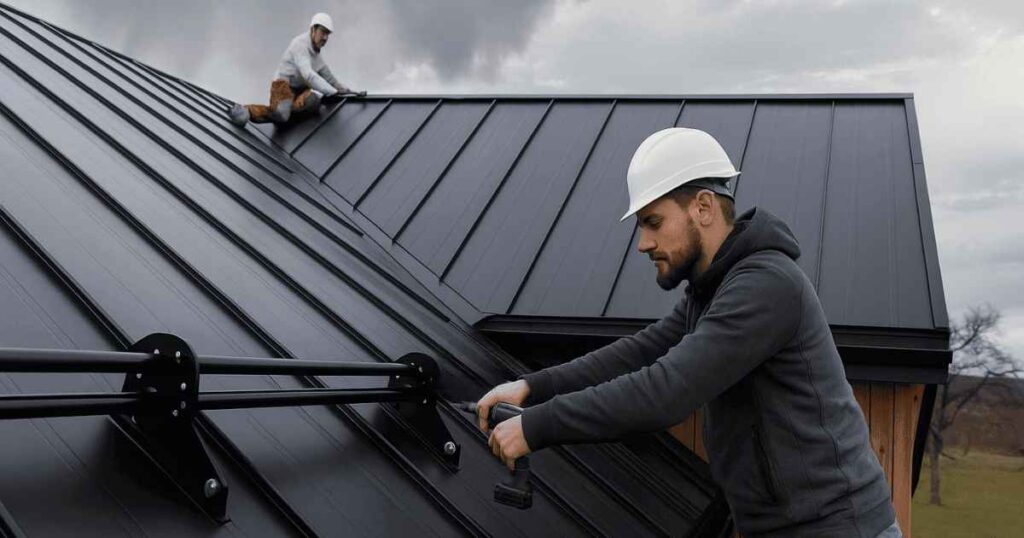
Metal roofs are becoming increasingly popular in Washington, Gerald, and Fenton. They offer excellent durability and can withstand strong winds and hail. However, to ensure home system compatibility, condensation management is essential. Without the right underlayment and insulation, metal roofing in humid climates can create moisture issues.
Clay or Concrete Tiles
Homes in Valley Park or Town & Country-inspired neighborhoods sometimes opt for clay or concrete tiles. These materials offer excellent durability and heat resistance. However, they are heavy, requiring structural evaluation for home system compatibility to ensure trusses and beams can handle the weight.
Synthetic Roofing Materials
Modern synthetic shingles replicate the look of slate, cedar, or tile but are lighter and more affordable. They often provide excellent home system compatibility since they can be paired with standard underlayment and framing without extra reinforcement.
Slate Roofing
For homeowners in St. Clair or Eureka seeking a premium look, slate is unmatched in durability and beauty. However, like clay tiles, it is very heavy and requires structural reinforcement to maintain home system compatibility.
Factors That Influence System Compatibility
When choosing roofing materials for your home, consider the following factors to ensure proper system compatibility:
- Climate Conditions: Heat, humidity, wind, and storm frequency.
- Roof Pitch: Steep slopes may require different materials than flat or low-slope roofs.
- Structural Support: Heavy materials like slate require reinforced framing.
- Ventilation and Insulation: Without proper airflow, even the best roofing material can fail.
- Budget and Maintenance: Home system compatibility also means selecting a solution that balances performance and cost for the long term.
The Role of Professional Assessment
At Emmendorfer Exteriors, we believe professional assessment is the key to ensuring home system compatibility. Our team evaluates not just the roofing material but the entire system, from attic ventilation to flashing details.
For example, a homeowner in Festus may want metal roofing, but our inspection might reveal that their attic insulation needs upgrading first. Similarly, a family in DeSoto considering clay tiles may need structural reinforcements. These adjustments ensure compatibility and prevent future problems.
Case Study: Washington Homeowner Chooses Compatibility Over Price
One of our recent clients in Washington initially wanted the most affordable asphalt shingles. After our assessment, we explained that due to the home’s ventilation issues and roof pitch, standard shingles would likely fail within ten years. Instead, we recommended impact-resistant shingles with specialized underlayment to ensure roof system compatibility with the home’s structure and climate. The homeowner invested slightly more upfront but gained decades of performance and a strong warranty.
Long-Term Benefits of System Compatibility
Ensuring system compatibility delivers lasting advantages:
- Durability: Roofs last longer when all components work together.
- Energy Efficiency: Proper insulation and ventilation reduce heating and cooling costs.
- Fewer Repairs: Compatible systems resist leaks, mold, and structural damage.
- Resale Value: Buyers appreciate documented proof of a well-designed roofing system.
- Peace of Mind: Homeowners know their roof can withstand Missouri’s unpredictable weather.
Preventing Common Compatibility Mistakes
Homeowners sometimes focus only on the outer roofing layer without considering the system as a whole. Common mistakes include:
- Choosing materials too heavy for the home’s structure.
- Ignoring ventilation needs, leading to condensation and mold.
- Using incompatible underlayment with specific roofing materials.
- Overlooking local climate when selecting shingles or tiles.
By working with professionals, homeowners avoid these errors and ensure the entire roof system functions as designed.
How Emmendorfer Exteriors Ensures System Compatibility
As a trusted roofing contractor in Union and surrounding Missouri communities, we take system compatibility seriously. Our process includes:
- Full home and roof inspection.
- Detailed discussion with homeowners about goals and budget.
- Material recommendations tailored to the Union climate.
- Coordination with manufacturers for warranties and installation standards.
- Professional installation with attention to every detail of the system.
Final Thoughts
Your roof is your home’s first defense against Missouri’s challenging climate. Choosing the right material is important, but ensuring system compatibility is what makes that material last. For homeowners in Union, Washington, Festus, St. Clair, Herculaneum, Gerald, Fenton, Valley Park, DeSoto, Pevely, and Eureka, investing in compatibility means fewer repairs, better energy efficiency, and peace of mind.
At Emmendorfer Exteriors, we guide homeowners through every step of the process, from material selection to full installation. By focusing on roof system compatibility, we deliver roofs that look beautiful, perform reliably, and protect homes for decades.
If you are considering a new roof or want to evaluate your current one, contact us Emmendorfer Exteriors today. Together, we’ll ensure your roofing system is fully compatible with your home and the Union climate.
Frequently Asked Questions About Roof System Compatibility
Q: What is the simplest way to understand “roof system compatibility” for my home?
A: It means all roof components (shingles, underlayment, ventilation, flashing) are engineered to work together as one durable, weather-resistant system.
Q: Why is proper attic ventilation so critical to roof system compatibility in a humid climate like Missouri’s?
A: Proper ventilation prevents trapped heat and moisture, which causes wood warping, shingle deterioration, mold, and ice dams in winter.
Q: If I choose a durable material like metal roofing, do I still need to worry about compatibility?
A: Yes. Metal requires specific, compatible underlayment and insulation to manage condensation, which is a major issue in humid Missouri.
Q: What are the risks of using roofing materials that are too heavy for my home’s structure?
A: The main risk is structural failure (sagging or cracking). Heavy materials like slate require a structural evaluation to ensure the framing can support the weight.
Q: Are standard asphalt shingles good for the Union climate, or should I choose an upgraded option?
A: For Union, it is best to choose architectural shingles with an impact-resistance rating (Class 4) for superior protection against the common wind and hail storms.
Q: My roof is low-sloped. How does the roof pitch affect system compatibility and material choice?
A: Low-sloped roofs require specialized, water-tight materials like single-ply membranes (TPO/PVC), as standard asphalt shingles are not compatible and will fail due to poor drainage.