Modern roofing systems in Union, Missouri, and surrounding communities rely heavily on durable single-ply membranes for long-term performance. Whether used on low-slope residential areas, additions, garages, or outbuildings, membrane roofing offers excellent waterproofing, flexibility, and weather resistance.
However, like any roofing system, seams and joints can experience stress over time. Temperature shifts, wind uplift, foot traffic, and aging materials may cause separation or weakening. When these issues arise, Membrane Welding Repairs serve as the most effective method for restoring single-ply systems through professional heat fusion that bonds materials at a molecular level.
Unlike adhesives or patch-style fixes, this technique creates a seamless, watertight bond that performs just as strongly as the surrounding material. At Emmendorfer Exteriors, we help homeowners in Union, Washington, Festus, St. Clair, Herculaneum, Gerald, Fenton, Valley Park, DeSoto, Pevely, and Eureka understand how proper heat fusion can extend roof life without the expense of replacement.
Understanding Single-Ply Membrane Roofing
Single-ply membrane roofing is commonly installed on low-slope and flat-style residential roofs throughout the Union region. These systems rely on thermoplastic materials that can be fused together for maximum durability.
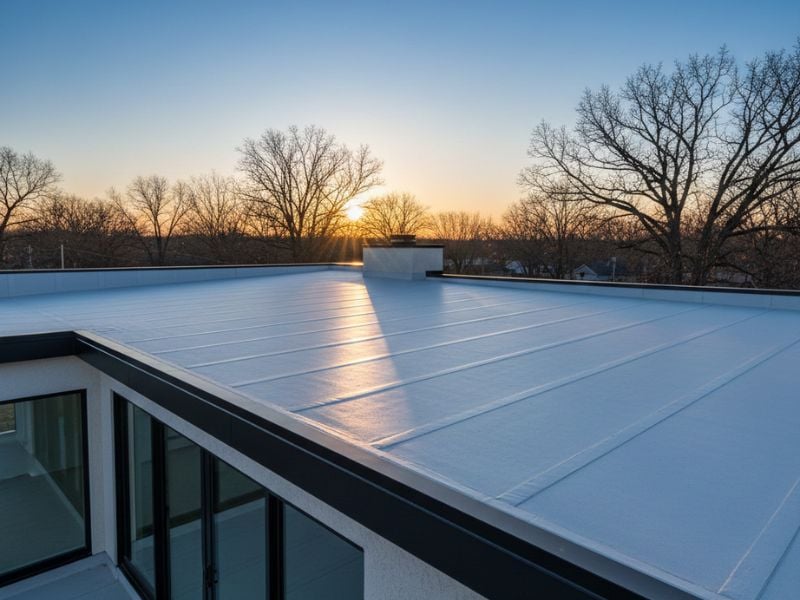
The most common systems include:
- TPO (Thermoplastic Polyolefin)
- PVC (Polyvinyl Chloride)
- Hybrid thermoplastic products
These membranes offer superior waterproofing, UV reflectivity for energy efficiency, and long service life in Missouri weather. Because seams and flashing areas experience the most stress, specialized maintenance is often needed throughout the roof’s lifespan.
Common Signs Your Roof Needs Membrane Welding Repairs
Homeowners in Union and surrounding cities should watch for early indicators of seam issues. Detecting these problems early allows for localized Membrane Welding Repairs before a full leak develops. Watch for:
- Visible Seam Separation: Gaps between membrane panels are a clear sign that fusion is failing.
- Raised Edges or Curling: Wind uplift or temperature changes may cause membranes to lift at the perimeter.
- Small Leaks Near Seams: Water penetration often begins at weak or aged welds.
- Wrinkling or Buckling: Movement in the membrane can stress the integrity of the seam lines.
- Flashing Separation: Areas around chimneys, skylights, or vents often show the first signs of wear.
Why Heat Fusion is Ideal for Missouri’s Climate
The climate in Union, Festus, Eureka, and Washington affects roofing systems differently throughout the year. From hot, humid summers to freezing winters with rapid temperature swings, your roof is in a constant state of expansion and contraction.
Because Membrane Welding Repairs reconnect materials through heat fusion rather than glues or surface-level patching, they offer superior performance for our region’s climate. Welded seams resist wind, moisture, and UV more effectively, giving homeowners peace of mind in all seasons.
The Professional Process: How Membrane Welding Repairs Work
Professional heat fusion requires specialized tools, precise temperature control, and expert roofing knowledge. Here is how Emmendorfer Exteriors performs the process:
- Roof Inspection: We assess membrane condition, seam strength, and moisture levels.
- Cleaning the Area: Dirt and oils are removed using specialized cleaners to ensure a pure bond.
- Preparation: We test weld temperatures to match the specific membrane thickness and age.
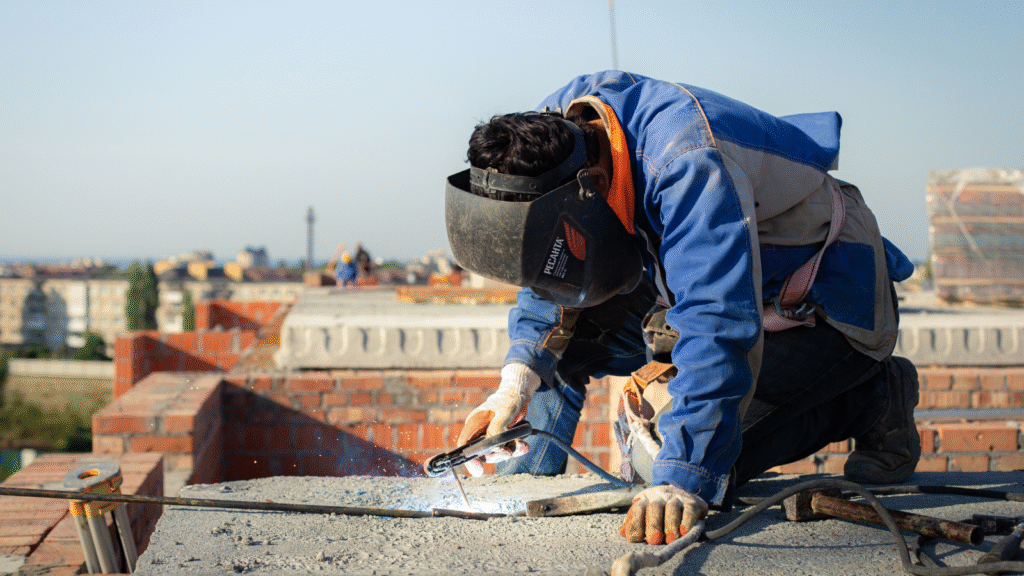
- Heat Welding: Using a professional hot-air welder, we apply controlled heat to create a molecular fusion.
- Pressure Rolling: A seam roller is used immediately to guarantee a uniform, permanent bond.
- Final Inspection: We verify weld strength and conduct a leak check to ensure a watertight seal.
Through this systematic approach, Membrane Welding Repairs provide a high-performance fix that outlasts traditional liquid-applied sealants.
Specific Types of Heat Fusion Repairs
Missouri roofs require different styles of intervention depending on the type of damage:
- Flat Seam Re-Welding: Used when existing seams begin to weaken or separate.
- Patch Welding: A small patch of matching membrane is welded over punctures or isolated wear.
- Penetration Welds: Reinforcing areas around vent pipes, chimneys, and skylights.
- Edge and Perimeter Welding: Strengthening zones most vulnerable to high-wind uplift.
By utilizing targeted Membrane Welding Repairs, technicians can address specific failure points without disturbing the rest of the roofing system.
How Proper Seam Maintenance Extends Roof Life
Choosing heat fusion over adhesive patches is a long-term investment. While some attempt temporary fixes with caulks, these often fail due to UV exposure and lack of flexibility. In contrast, professional welding bonds the material permanently, maintaining the roof’s ability to “breathe” and move with the building.
When performed correctly, these techniques can add 10 years or more to your roofing system, effectively delaying the need for a costly total replacement.
Conclusion
Membrane roofing systems are durable and reliable, but they require expert seam maintenance to perform their best. For homeowners across the Union region, Membrane Welding Repairs offer the most dependable way to restore waterproofing and strengthen aging areas of your home.
Whether you are dealing with seam separation, flashing problems, or weather wear, heat fusion provides a long-lasting solution. If you’d like a professional evaluation to determine the best path forward for your roof, contact Emmendorfer Exteriors in Union, MO, for expert guidance and dependable roofing solutions.
Frequently Asked Questions
1. How long do membrane welding repairs typically last?
When performed by a professional, a heat-welded repair is considered permanent. It creates a monolithic bond that is often stronger than the surrounding membrane and can last for the remaining service life of the roof, often 10–15 years or more.
2. Can you use heat welding on an older, weathered roof?
Yes, but it requires extensive preparation. Aged membranes must be deeply cleaned with specialized solvents to remove oxidation. If the membrane has become too brittle, our technicians may recommend alternative reinforcement methods.
3. Is membrane welding better than using roofing adhesives or tape?
Absolutely. Adhesives and tapes rely on a surface bond that can degrade over time due to moisture and temperature swings. Heat welding fuses the two layers into a single piece of material, eliminating the “interface” where failures usually occur.
4. Can TPO and PVC membranes be welded together?
No. TPO and PVC are chemically different materials. They require different temperature settings and will not form a molecular bond with one another. A repair must always use a patch material that matches the existing roof.
5. How do I know if my roof can be repaired or if it needs a full replacement?
If the majority of the membrane is still flexible and the leaks are isolated to seams or punctures, repairs are usually the best option. However, if the membrane is shattering, “chalking” excessively, or the insulation underneath is saturated, a replacement may be necessary.