
Fascia, Soffit, and Trim Rot: What It Means and When to Replace It With Your Roof or Siding
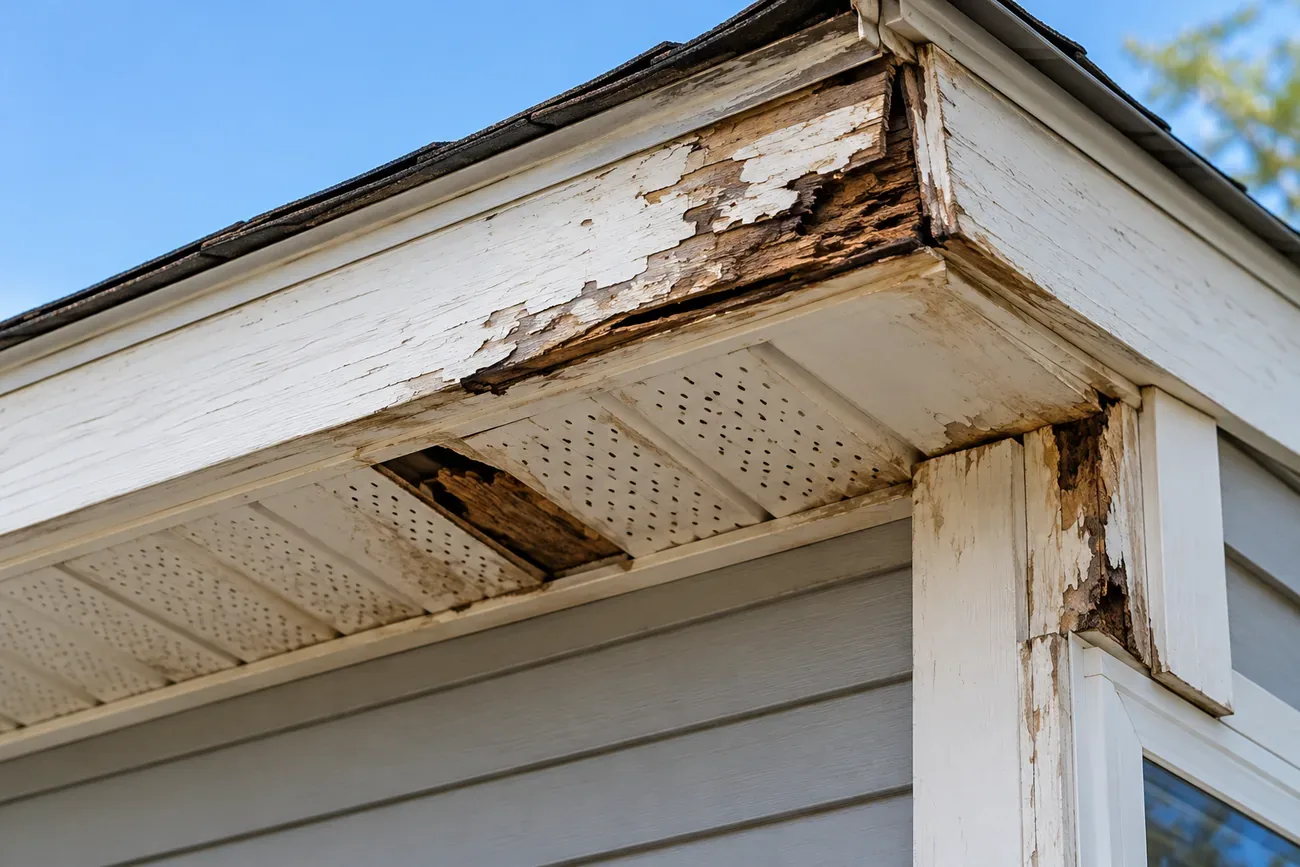
Peeling paint along the roof edge, a soft spot when you press on the board behind the gutter, a sagging panel under the eave, birds flying in and out of a gap near the corner. These are the usual first signs of fascia, soffit, or trim rot. The wood itself isn't the root problem. Water got to it from somewhere, and replacing the board without fixing the source means doing the job again in a few years.
Emmendorfer Exteriors replaces failed fascia, soffit, and trim as part of our roofing, siding, and gutter work across Franklin County. This guide explains what each part does, where the water comes from, and when a spot repair is enough versus when it makes sense to replace everything along with a larger project.
Fascia, soffit, and trim: what each one does
| Part | Where it is | What it does | How it usually fails |
|---|---|---|---|
| Fascia | Vertical board along the roof edge, behind the gutter | Caps the rafter ends and holds the gutter | Rot behind the gutter, peeling paint |
| Soffit | Underside of the roof overhang | Closes the eave; vented soffit lets air into the attic | Sagging, stains, gaps, pests |
| Rake and frieze boards | Along gable edges and the top of the wall | Finish the roofline and cover joints | Rot at ends and corners |
| Corner and window trim | Outside corners and around openings | Covers siding edges and seals joints | Rot at the bottom ends, failed caulk |
Where the water comes from
Rot at the roof edge almost always traces back to one of a few sources:
- Gutters that overflow, sit clogged, or are pitched the wrong way, so water spills over the back edge onto the fascia. Our seamless gutter guide covers sizing and downspouts.
- Missing or short drip edge, which lets water run behind the gutter instead of into it. Current code requires drip edge at eaves and rakes, as our roofing codes guide explains.
- Ice dams that push meltwater back under the shingles at the eave. Our ice dam guide explains how they form.
- Blocked or missing soffit vents, which trap moist attic air that condenses on cold wood in winter. Our attic ventilation guide covers balancing intake and exhaust.
- A missing kickout flashing where a roof edge meets a sidewall, which sends water down the wall and into the trim below. The Vinyl Siding Institute's installation manual shows a kickout or diverter at that spot.
Whoever replaces the wood should tell you which of these caused the rot and how they're fixing it.
Signs it's time to look closer
You can spot most fascia and soffit problems from the ground:
- Paint that peels or blisters along the roof edge year after year.
- Wood that feels soft or crumbles when pressed with a screwdriver.
- Gutters pulling away from the house or sagging between hangers.
- Soffit panels that sag, stain, or have gaps at the joints.
- Birds, squirrels, or wasps entering at the eaves.
- Dark streaks or mildew on the soffit below a roof valley.
Rot at the fascia sometimes continues into the roof deck at the eave. If the board is soft, ask your roofer to check the first few feet of decking too. Our article on roof decking on older homes explains what that looks like.
Spot repair now, or replace with a bigger project?
| Situation | Usually a spot repair | Usually replace with the project |
|---|---|---|
| Extent of rot | One short section, rest of the edge sound | Rot in several places or along whole runs |
| Gutters | Gutter holding, fascia soft in one spot | Gutters pulling loose because the fascia won't hold |
| Upcoming roof replacement | Not planned soon | Planned; tear-off exposes the edge |
| Upcoming re-side | Not planned soon | Planned; walls and trim are open |
| Cause of the water | Fixed, such as a cleaned gutter | Still unresolved |
Timing matters. A roof replacement exposes the fascia once the old shingles and gutters come off, which is the best moment to replace rotten boards, install new drip edge, and hang new gutters so they lap correctly. We check the fascia on every roof we inspect, and our roof replacement work replaces failed fascia instead of covering it. A re-side opens the walls, so corner and window trim can be replaced at the same time. Our siding service covers that work.
Covering rot is not fixing it
Aluminum or vinyl coil wrapped over wood fascia is common, and it does protect sound wood from weather. Wrapped over rotten wood, it hides the problem and holds moisture against the board. The VSI installation manual makes the same point about soffits: if existing soffit is rotted or damaged, remove it completely before installing new vinyl soffit.
Replacement materials include painted wood, wood covered with aluminum or vinyl fascia wrap, vinyl or aluminum soffit in vented or solid panels, and composite or PVC trim boards. The right choice depends on what matches your siding and how much repainting you're willing to do.
Older homes and lead paint
On houses built before 1978, painted fascia, soffit, and trim may contain lead. The EPA's Renovation, Repair and Painting rule requires paid work that disturbs 20 square feet or more of painted exterior surface on those homes to be done by a certified firm using lead-safe practices. Replacing fascia along a single eave can pass that threshold. The EPA's homeowner guidance explains what to ask a contractor.
Frequently asked questions
Can rotted fascia be covered with aluminum?
It shouldn't be. Aluminum wrap protects sound wood, but over rotten wood it hides the damage and traps moisture. Replace the soft boards first, then wrap or paint the new wood.
Does homeowners insurance cover rotted fascia?
Usually not. The Missouri Department of Insurance notes that wear and tear isn't covered, and slow rot from overflowing gutters or long-term leaks generally falls in that category. Sudden storm damage is different, so check your policy.
What's the difference between fascia and soffit?
Fascia is the vertical board along the roof edge that holds your gutters. Soffit is the horizontal panel underneath the overhang. Vented soffit also supplies intake air for attic ventilation.
Why does rot keep coming back behind my gutters?
Usually because the water source wasn't fixed. Common causes are gutters that overflow or tilt toward the house, and missing drip edge that lets water run behind the gutter. Replacing the board alone doesn't stop either one.
Should my soffits be vented?
Most attics need intake air at the eaves to balance exhaust at the ridge, and vented soffit is the usual way to provide it. Your local building code sets ventilation requirements, and a roofer can check whether your intake is open or blocked.
Fixing the edge for good
Rotted fascia, soffit, or trim is a sign that water is getting where it shouldn't. Find the source, replace the soft wood instead of covering it, and time larger replacements to your next roof or siding project when you can. Emmendorfer Exteriors replaces failed fascia and trim during roofing, siding, and gutter installation, and shows you what we find before we cover anything. Request a free estimate and we'll trace the rot back to where it started.
A real Emmendorfer walks your actual roof and gives you a firm written price. Family-owned since 1990.