
Roof Decking on Older Franklin County Homes: Plank Decking, Re-Sheathing, and What It Adds to Your Price
"Decking replacement, per sheet" is the line on a roofing estimate that makes homeowners the most suspicious. It reads like an open-ended add-on, and nobody can tell you the final number until the old roof is off. On older homes in Union, Washington, Pacific, and the rest of Franklin County, though, the wood under the shingles decides whether a new roof lasts its full rated life or starts failing early.
At Emmendorfer Exteriors, we tear off to the deck on every replacement, so we see what decades of storms and freeze-thaw cycles leave behind. This article explains what roof decking is, the types you'll find on older houses, the signs it needs work, and how it should appear on a fair estimate.
What roof decking is
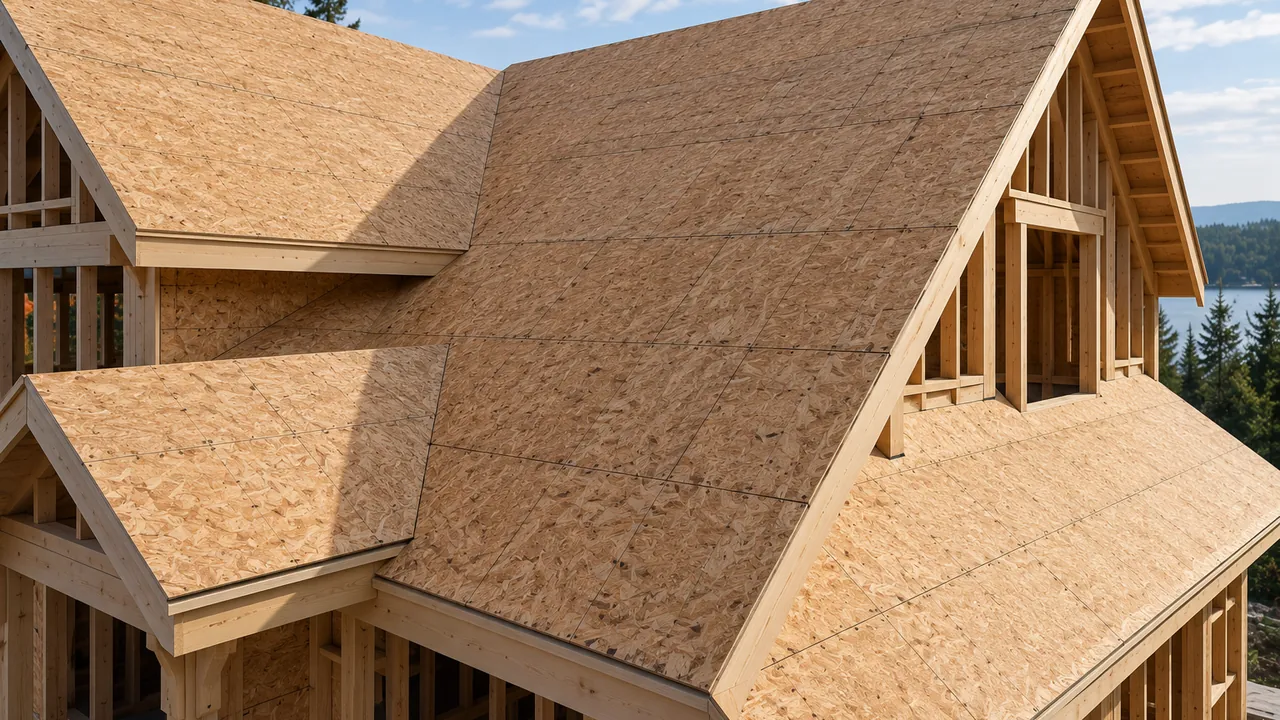
Roof decking, also called roof sheathing, is the layer of plywood, OSB, or wood boards fastened across the rafters or trusses. Underlayment and shingles nail into it, and it stiffens the roof frame against wind. The International Residential Code requires asphalt shingles to be fastened to solidly sheathed decks (Section R905.2.1). Shingle manufacturers add their own minimums in their installation instructions.
A typical evaluation report, such as ICC-ES ESR-1717 for one asphalt shingle line, calls for at least 3/8-inch exterior-grade plywood, 7/16-inch OSB, or solid sheathing of nominal 1-inch boards. The exact requirement for your roof is in the instructions for the shingle named on your estimate.
The decking types under older Missouri roofs
| Decking type | How to recognize it | Common problems | Usual fix |
|---|---|---|---|
| Plywood | Layered wood veneer sheets, usually 4 by 8 feet | Delamination, rot at valleys and edges | Replace damaged sheets |
| OSB | Sheets of pressed wood strands | Swollen edges after moisture, loss of strength | Replace damaged sheets |
| Solid plank (board) decking | 1x6 or 1x8 boards laid tight across the rafters | Split or rotted boards, nails working loose, gaps from shrinkage | Replace bad boards, or overlay with sheathing |
| Spaced (skip) sheathing | Boards with open gaps between them, built for wood shakes | Not a solid deck for asphalt shingles | Sheathe the full roof with plywood or OSB |
Newer homes almost always have plywood or OSB. Older homes are where plank decking turns up, and occasionally skip sheathing left over from an original wood-shake roof that was later shingled over.
Why plank decking causes surprises
Board decking can be perfectly sound. Solid, tight boards in good condition meet the code's solid-deck requirement and hold nails well. The trouble is that boards behave differently from sheets. They shrink and open gaps over the years, knots loosen, and a single rotted board can sit under a roof that looks fine from the yard.
You can get a rough idea before any contractor arrives. Take a flashlight into the attic and look up at the underside of the roof. Large flat sheets with stamped grade markings mean plywood or OSB. Long, narrow boards running across the rafters mean plank decking. Boards with open gaps, where you can see the underside of felt or old shingles between them, usually mean skip sheathing. Mention what you see when you request estimates, so the quotes account for it.
Signs the decking needs replacing
Some of these show up from inside the house and some only appear once the old roof comes off:
- A soft or spongy feel underfoot when the roof is walked.
- Dark staining or rot around chimneys, skylights, valleys, and the lower edge of the roof.
- Plywood layers separating, or OSB swollen and crumbling at the edges.
- Nails that pull out by hand or won't hold when new shingles go on.
- A roofline that sags between rafters when you sight along it from the street.
- Daylight visible through the deck from the attic.
Most decking rot traces back to water that sat in the wood for a long time. Slow leaks at flashing, ice dams at the eaves, and poor attic ventilation are the usual causes. Trapped attic moisture condenses on the underside of the deck in winter, and our attic ventilation guide explains how balanced intake and exhaust prevent it. Ice dam damage is covered in our winter roof damage guide.
Spot replacement or full re-sheathing?
When the damage is isolated, the crew cuts out the bad sections and replaces them with new sheets of matching thickness, fastened to the rafters. That's the most common case on a typical tear-off.
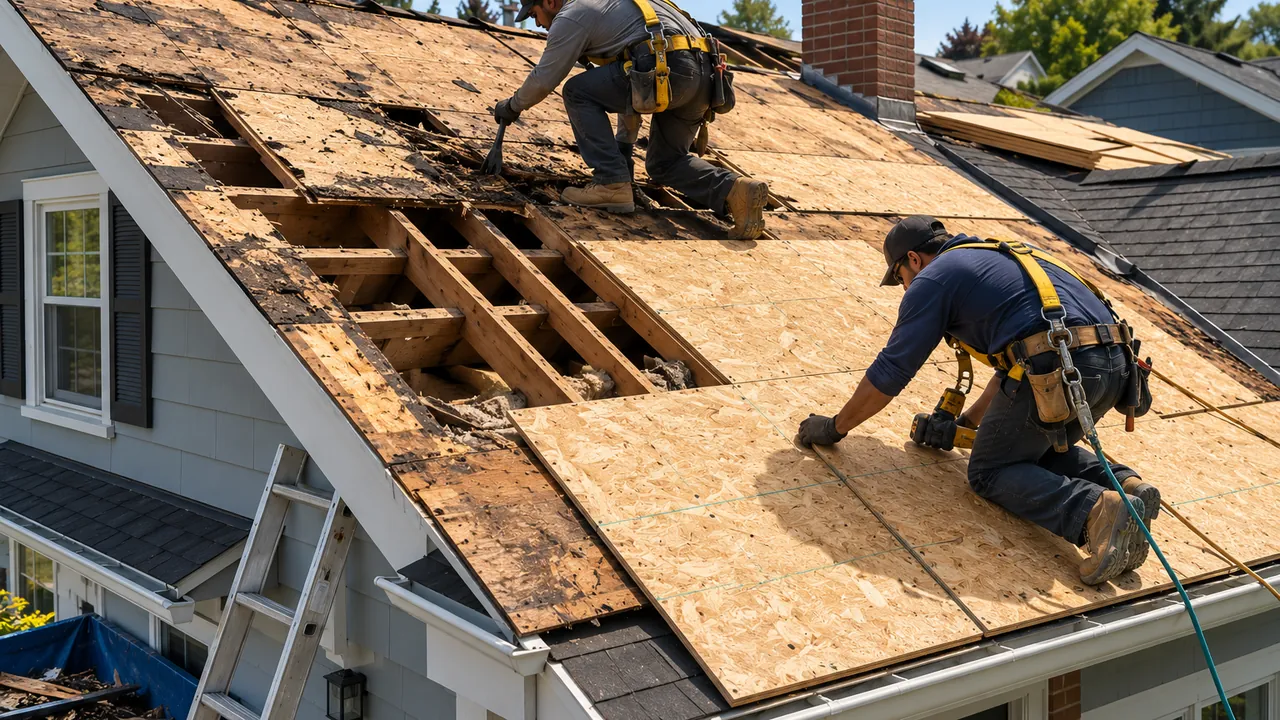
Full re-sheathing makes sense in a few situations. Skip sheathing needs a solid layer of plywood or OSB over the whole roof before asphalt shingles can go on. Plank decking with widespread gaps, split boards, or rot is often better covered with new sheathing than patched board by board. A roof that had a layover for years can have moisture damage spread across the entire deck, which is one reason we explain in our article on full tear-off vs. roof layover why a layover hides problems.
In each case, the new sheathing gets nailed through to the framing on the pattern the code requires, which our roofing codes guide covers.
How decking should appear on your estimate
Because no one can see the whole deck before tear-off, contractors handle decking in a few ways. Some list a per-sheet price that applies only to sheets actually replaced. Some include a fixed allowance. When skip sheathing is visible from the attic, the full re-sheathing can be priced up front as its own line.
On an Emmendorfer estimate, decking is priced by the sheet and added only when we find soft or rotten wood once the old roof is off. We show you every bad sheet before we cover it, so the add-on is never a surprise. Whatever contractor you choose, ask these before you sign:
- What is the price per sheet, and what thickness is the replacement?
- How will I be told what you find, and will I see photos?
- If the deck needs full re-sheathing, how is that priced?
A quote with no decking line at all is the one to question. Either the cost appears later as a change order, or the bad wood gets covered. Our guide on how to compare roofing quotes shows where decking fits among the other line items, and our roof cost guide puts it alongside the other factors that move the price.
Frequently asked questions
How much does it cost to replace roof decking?
It depends on how many sheets need replacing, which isn't known until tear-off. Contractors usually quote a per-sheet price in advance and charge only for the sheets they replace. Full re-sheathing over skip boards is priced as its own line.
Can shingles go over plank decking?
Yes, if the boards are solid, tight, sound, and meet the shingle manufacturer's deck requirements. Damaged boards get replaced. Spaced or skip sheathing must be covered with plywood or OSB before asphalt shingles are installed.
How do I know if my house has skip sheathing?
Look at the underside of the roof from the attic. If you see boards with open gaps between them, and felt or old shingles showing through those gaps, the roof likely has skip sheathing from an original wood-shake roof.
Does homeowners insurance pay for rotten roof decking?
Policies typically exclude rot from age, wear, or long-term leaks. Decking broken by a covered storm may be part of a claim, and some policies include ordinance or law coverage for code-required work. Your agent can tell you what your policy includes.
Does a new roof always need new decking?
No. Sound decking stays in place. Only soft, rotted, delaminated, or broken sections get replaced, and skip sheathing gets covered. A tear-off is what lets the crew check every sheet before the new roof goes on.
What's under your roof matters
The decking line on an estimate isn't padding when it's priced clearly and backed by what the crew finds on your roof. On older Franklin County homes, it's often the difference between a roof that lasts and one that fails early. Emmendorfer Exteriors tears off to the deck, replaces failed decking and fascia, and shows you the wood before we cover it. Request a free inspection for a written roof replacement estimate with the decking terms spelled out.
A real Emmendorfer walks your actual roof and gives you a firm written price. Family-owned since 1990.