
Seamless Gutters for Missouri Downpours: Sizing, Downspouts, and When to Replace Them With Your Roof
A gutter system has one job: carry roof water away from the house before it soaks the fascia, runs behind the siding, or pools against the foundation. Eastern Missouri tests that job with short, heavy bursts of rain. Gutters that overflow even when they're clean are usually undersized or short on downspouts, not defective.
Emmendorfer Exteriors installs seamless aluminum gutters across Franklin County, formed on site from a continuous coil and cut to the length of each roofline. This guide explains how gutter and downspout sizing works, where the water should end up, what gutter guards can and can't do, and why the best time for new gutters is often the day your roof gets replaced.
What makes a gutter seamless
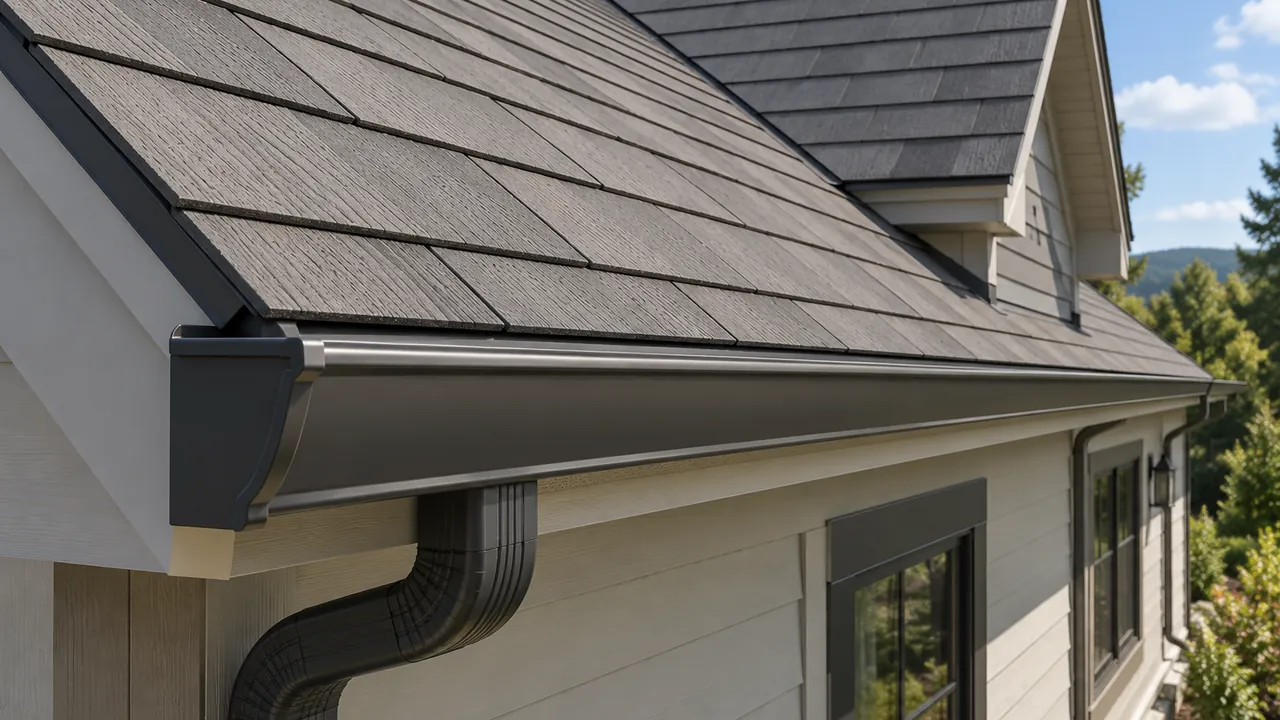
A seamless gutter is formed in one continuous piece for each run of roofline, using a portable machine that shapes flat aluminum coil into a K-style profile at the house. The only joints are at the corners, end caps, and downspout outlets. Sectional gutters, the kind sold in 10-foot lengths at home centers, have a joint every section, and each joint is one more spot that can leak or pull apart as the metal expands and contracts.
5-inch or 6-inch: how gutter sizing works
Gutter size depends on how much water reaches each run in a hard rain. That comes down to three inputs: the roof area draining into the run, the roof's pitch, and local rainfall intensity.
University of Missouri Extension's roof gutter design guide shows how engineers account for pitch. Instead of using the flat footprint of the roof alone, the guide multiplies it by a design factor that rises with steepness.
| Roof pitch | Design-area factor (MU Extension) |
|---|---|
| Level to 3 inches per foot | 1.00 |
| 4 to 5 inches per foot | 1.05 |
| 6 to 8 inches per foot | 1.10 |
| 9 to 11 inches per foot | 1.20 |
| 12 inches per foot | 1.30 |
That adjusted area is then multiplied by a short-duration rainfall intensity for the location. In MU Extension's central Missouri example, the design storm is 7.2 inches per hour over five minutes, a burst expected about once in 10 years. The guide notes that some storms have been twice that intense.
In practice, most Franklin County homes do well with 5-inch K-style gutters. A 6-inch gutter makes sense for large roof planes, steep pitches, valleys that dump into a short run, and gutters that already overflow when they're clean. Our seamless gutter installation page shows the sizing rule we use on site.
Downspouts: size, spacing, and where the water goes
A bigger gutter won't help if the downspouts can't drain it. A common rule of thumb, used in guidance from the University of Illinois and Texas A&M AgriLife, is one square inch of downspout opening for every 100 square feet of roof.
| Downspout size | Cross-section | Approximate roof area drained |
|---|---|---|
| 2 by 3 inches | 6 square inches | About 600 square feet |
| 3 by 4 inches | 12 square inches | About 1,200 square feet |
MU Extension adds a few practical numbers for installation:
- Downspouts are typically spaced 20 to 50 feet apart, with 60 feet as a maximum.
- A gutter slope of about 1/16 inch per foot helps water run toward the outlets.
- Hangers are normally spaced 3 feet apart, and 1.5 feet apart where ice and snow linger.
- Aluminum gutters move about 1.54 inches per 100 feet over a 100-degree temperature swing, so hangers have to let the gutter expand and contract.
Where the water lands matters as much as how it gets down. In areas with expansive or collapsible soils, the International Residential Code (Section R801.3) requires roof drainage to discharge at least 5 feet from foundation walls or into an approved drainage system. Even where that rule doesn't apply, extensions or splash blocks that move water away from the house, onto ground that slopes away, protect the basement and the soil around it.
Why to replace gutters along with your roof
If your gutters are aging and a roof replacement is coming up, doing both at once saves work and protects the new roof. Here's the usual sequence:
- The old gutters come down during tear-off, exposing the fascia and gutter boards.
- Soft or rotten fascia gets replaced while it's accessible.
- New drip edge goes on along the eaves and rakes. Current code requires drip edge on every roof edge, as our roofing codes guide explains.
- The shingles are installed.
- New gutters are hung so roof water sheds off the drip edge into the trough.
Hanging old gutters back on new fascia, or pulling them off a year later, risks damaging the new roof edge. One crew and one cleanup also beats two separate jobs. Our roof replacement estimates can include gutters on the same written quote.
Gutter guards: an honest look
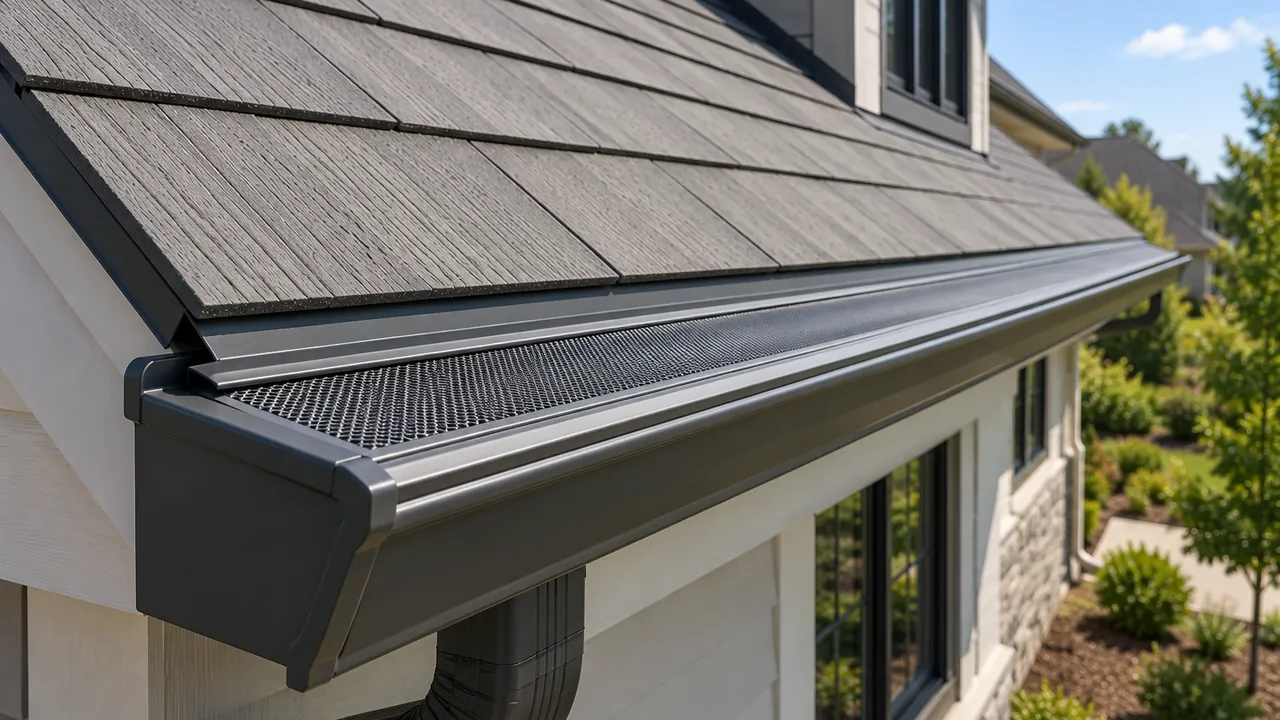
Gutter guards cut down on clogs, especially under oaks and maples that drop leaves into the troughs every fall. They don't make gutters maintenance free. Debris can collect on top of screens and covers, and a guard that can't take in water fast enough lets heavy rain shoot past the gutter. A guard should be matched to the tree line around your house and the pitch of your roof. Ask how a specific guard handles a heavy downpour before you buy it.
Signs your gutters need replacing
Gutters usually give plenty of warning before they fail completely:
- Overflow during heavy rain even after the gutters are cleaned.
- Sagging runs, or hangers pulling away from the fascia.
- Leaks at seams and corners, or rust on old steel gutters.
- Peeling paint, staining, or soft wood on the fascia behind the gutter.
- Washed-out soil, puddles, or basement dampness near downspouts.
- Dents and dings after a hailstorm.
Hail-dented gutters and downspouts also help show how large the hail was and which direction it came from, so photograph them before anything is repaired. Our guide to documenting hail damage before the adjuster arrives explains what to capture. Fascia rot behind long-neglected gutters often extends into the roof edge, which our article on roof decking on older homes covers.
Frequently asked questions
Are 6-inch gutters worth it?
For large roof planes, steep pitches, and runs fed by valleys, often yes. A 6-inch gutter carries more water and pairs with larger 3 by 4 downspouts. For an average roof with standard pitch, 5-inch gutters with enough downspouts usually do the job.
How many downspouts does a house need?
It depends on the roof area draining to each run. A common rule is one square inch of downspout per 100 square feet of roof, so a 2 by 3 downspout handles about 600 square feet. MU Extension notes typical spacing of 20 to 50 feet.
Should I replace my gutters when I replace my roof?
If the gutters are near the end of their life, yes. Tear-off exposes the fascia for repairs, new drip edge can be lapped correctly into the new gutters, and you avoid disturbing a new roof edge later.
Do gutter guards really work?
They reduce clogging from leaves and seeds, which means fewer ladder trips. They don't eliminate maintenance, and some designs struggle to take in water during very heavy rain. The right guard depends on your trees and roof pitch.
Will insurance cover hail-damaged gutters?
If hail or wind caused the damage, gutters are often included in a storm claim, though your insurer decides coverage. Photograph dented gutters and downspouts before repairs. Our storm damage and insurance claims page explains how we document storm damage.
Getting your gutters right
Properly sized seamless gutters, enough downspouts, and a discharge point well away from the foundation keep Missouri downpours from turning into fascia rot or a wet basement. Emmendorfer Exteriors measures each roofline on site, checks the wood behind the gutter, and forms seamless aluminum gutters at your house.
We install gutters in Union, Washington, Pacific, St. Clair, Sullivan, Villa Ridge, and New Haven. Request a free gutter estimate and we'll size a system for your roof.
A real Emmendorfer walks your actual roof and gives you a firm written price. Family-owned since 1990.