
Metal Roof Hail Damage and Cosmetic Exclusions: Read Your Policy Before You Buy Metal
A standing-seam metal roof handles hail better than almost any other residential roof. It doesn't lose granules, and a properly installed panel rarely punctures. It can still dent, though, and many Missouri homeowners policies won't pay for dents that only change how the roof looks. Plenty of people find that out after the first big storm instead of before they sign for the roof.
Emmendorfer Exteriors installs standing-seam metal across Franklin County, and we'd rather you know how your policy treats a dented panel before you choose one. This article explains the difference between cosmetic and functional hail damage, what a Class 4 rating does and doesn't promise, and what to ask your insurance agent first.
Cosmetic vs. functional hail damage on a metal roof
Insurers, engineers, and adjusters sort hail damage into two categories:
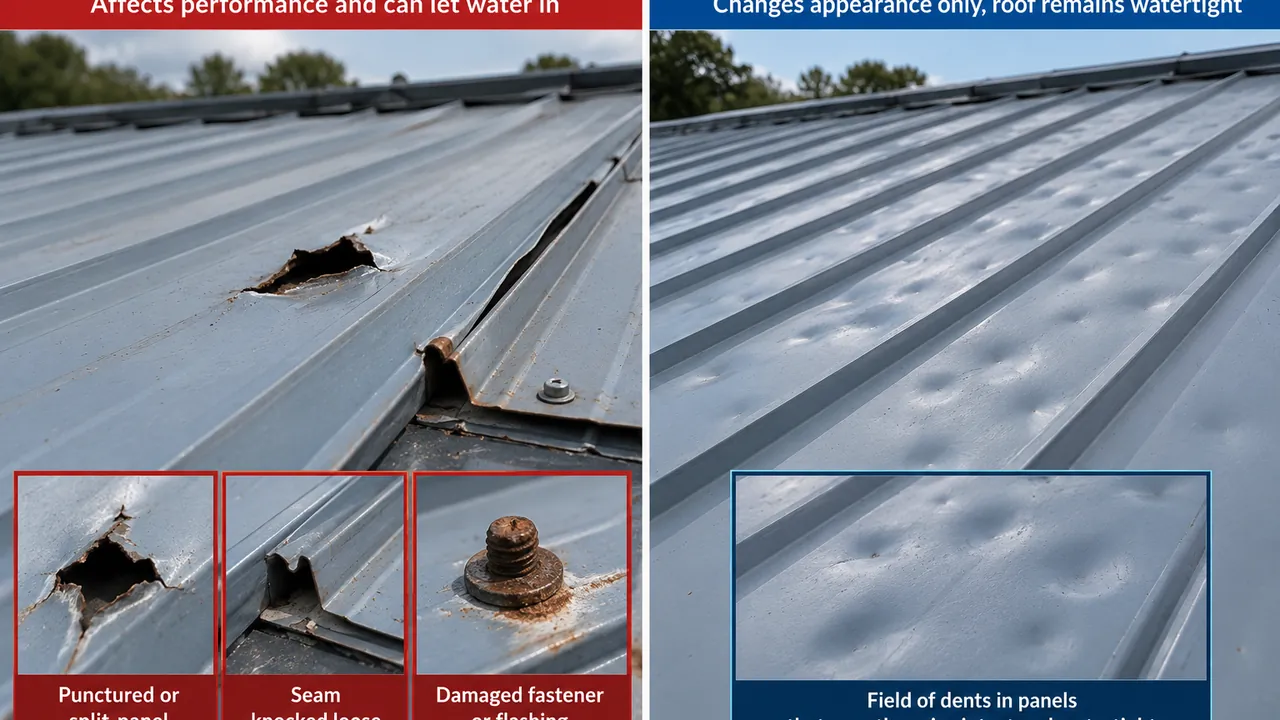
- Functional damage reduces the roof's ability to keep water out or shortens its service life. On metal, that means a punctured or split panel, a seam knocked loose, or a damaged fastener or flashing that lets water in.
- Cosmetic damage changes the roof's appearance without affecting how it performs. On metal, that's usually a field of dents in panels that are otherwise intact and watertight.
A metal roof after a large-hail storm often shows the second kind. That's good news for the house, since the roof keeps working. It can be bad news for the claim, depending on your policy.
What a Class 4 rating does and doesn't tell you
In IIBEC Interface, Fall 2025, UL 2218 is prescribed as the standard impact test for roof coverings. Steel balls of increasing size are dropped from increasing heights onto the roofing, and the material is graded on whether it cracks, tears, or opens up. Class 4 is the top rating.
| UL 2218 class | Steel ball diameter | Drop height |
|---|---|---|
| Class 1 | 1¼ inches | 12 feet |
| Class 2 | 1½ inches | 15 feet |
| Class 3 | 1¾ inches | 17 feet |
| Class 4 | 2 inches | 20 feet |
The test grades whether the roofing fails, not whether it marks. According to that IIBEC paper, most metal roof panels meet Class 4, including common 26-gauge Galvalume panels. A Class 4 metal roof, in other words, is very unlikely to be punctured by hail, but it isn't dent-proof. Franklin County takes hail large enough to dent metal, as our Franklin County hail and wind storm history shows.
How cosmetic damage exclusions work
A cosmetic damage exclusion is policy language, usually added by endorsement, that removes coverage for hail damage limited to appearance. The Missouri Department of Insurance publishes a free tool, Raising the Roof on Insurance Coverage, that summarizes roof coverage for the 20 largest homeowners insurers in the state. Several of those summaries list metal-roof exclusions, written in different ways:
| Wording you might see | What it means for a dented metal roof |
|---|---|
| Excludes cosmetic loss limited to the physical appearance of a metal roof surface | Dents alone aren't covered |
| Won't pay for hail damage to a metal roofing surface unless it no longer keeps water out | Coverage starts only when the roof leaks or fails |
| Marring to metal roof components excluded, with coverage available for an added premium | You may be able to buy the coverage back |
| Excludes hail damage to metal vents, flashing, drip edge, or trim unless water leaks in | Applies to metal parts of shingle roofs, too |
That last row surprises a lot of people. Even if your roof is asphalt shingle, dented metal vents, flashing, and drip edge may be excluded under some policies unless they leak. The tool's summaries are general and can change, so the policy and endorsements in your own file are what decide coverage.
Exclusions are sometimes tied to a premium credit. Texas, for example, created an optional cosmetic hail exclusion endorsement in 1998 that can only be attached to policies receiving a credit for an impact-resistant roof, according to a Texas Department of Insurance bulletin. Missouri's carriers write their own forms, so ask how any discount and any exclusion connect on your policy.
Are hail dents really just cosmetic?
Engineers disagree. Some argue that hail dents create tiny coating fractures or catch water, leading to early corrosion. A study published by IIBEC in 2025 tested that on Galvalume-coated steel panels with lab salt-spray testing and a Fort Worth roof inspected 27 years after a major hailstorm.
The authors found no corrosion at the dents and concluded that dents from hail up to 2½ inches generally count as cosmetic unless they split a panel or disengage a seam. Others in the field still contest that view, and policy wording, not engineering opinion, settles any given claim.
Questions to ask your agent before you choose metal
Make this call before you sign a metal roofing contract, and ask for the answers in writing:
- Does my policy, or my next renewal, include a cosmetic damage exclusion for metal roofs or metal roof components?
- If it does, can I buy that coverage back, and what does it cost?
- Will switching from shingles to metal change my premium, my deductible, or any discount?
- Is my roof covered at replacement cost or actual cash value, and does that change with a metal roof?
- What's the form number of any roof endorsement, so I can read the exact wording?
If you're shopping carriers, the Missouri Department of Insurance tool is a quick way to compare how the larger insurers handle metal roofs.
Panel choices that resist visible denting
Some decisions at the design stage reduce how much a hailstorm shows:
- A lower gauge number means thicker steel. Our standing-seam metal roofing uses 24- to 26-gauge steel, and 24-gauge resists dents better than thinner panels.
- Wide, perfectly flat pans show dents more readily than panels with striations or stiffening ribs.
- We tear off to the deck and replace soft sheathing so panels lie true and are supported across their width.
- Our panels carry a baked-on Kynar finish, and the IIBEC testing found no coating cracks at simulated hail impacts.
If hail is your main worry and an exclusion makes metal less attractive, a Class 4 impact-resistant shingle may fit better. Our metal vs. shingle guide compares the two for Missouri homes.
After a hailstorm hits a metal roof
Check for the damage that matters most first: punctures, split panels, loose seams, damaged flashing, and any sign of a leak in the attic or ceiling. Then photograph dents on panels, vents, gutters, and downspouts before anything is repaired.
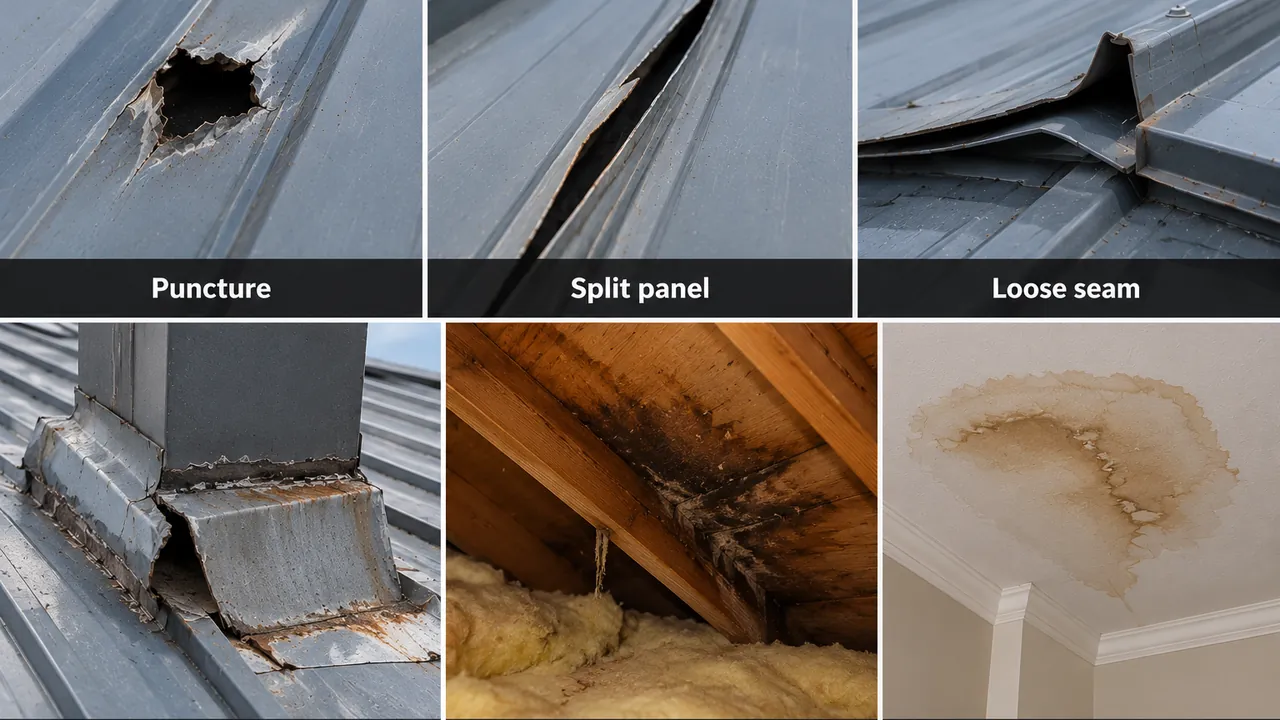
Our guide to documenting hail damage before the adjuster arrives explains what to capture, and a free roof inspection will separate functional damage from cosmetic marks. Your insurer makes the coverage decision under your policy's wording.
Frequently asked questions
Does hail damage metal roofs?
Large hail can dent metal panels, but a properly installed steel roof rarely punctures. Most dents leave the roof watertight. Functional damage, such as a split panel, loose seam, or damaged flashing, is less common and is what lets water in.
Is cosmetic hail damage to a metal roof covered in Missouri?
It depends on your policy. Several large Missouri insurers include exclusions for appearance-only damage to metal roofs, according to the Missouri Department of Insurance's roof coverage tool. Check your declarations page and endorsements, or ask your agent.
Does a Class 4 rating mean a metal roof won't dent?
No. UL 2218 grades whether roofing cracks or tears when struck, not whether it dents. A Class 4 metal panel resists puncture from very large hail but can still show visible dents.
Can a cosmetic exclusion affect a shingle roof?
Yes. Some Missouri policies exclude hail dents to metal roof components, such as vents, flashing, drip edge, and trim, unless the damage causes a leak. That applies even when the main roof is asphalt shingle.
Should I skip metal if my policy has a cosmetic exclusion?
Not necessarily. A metal roof with cosmetic dents still keeps water out. Weigh how much appearance matters to you, whether you can buy back coverage, and how long you'll own the home.
Know the policy, then pick the roof
Metal is one of the toughest roofs you can put on a Franklin County home, and the right policy wording makes it a better investment. Emmendorfer Exteriors walks your roof, names the panel, gauge, and color on the written estimate, and will tell you plainly whether metal or shingle fits your house.
We install metal roofing in Union, Washington, Pacific, St. Clair, Sullivan, Villa Ridge, and New Haven. Call your agent first, then request a free metal roofing estimate.
A real Emmendorfer walks your actual roof and gives you a firm written price. Family-owned since 1990.